Espresso Grinder vs Coffee Grinder: The Real Difference (November 2026)
An espresso grinder is a coffee grinder tuned for fine, precise adjustment, but many burr grinders can serve both espresso and other brew methods. Choose by how finely you can adjust the grind and how you want to dose.
On this page (7 sections)
- Espresso grinder vs coffee grinder: what is the difference?
- Which grinder fits your routine?
- Does burr type matter for espresso?
- How should you choose grind adjustment and dosing?
- Should you buy a grinder built into an espresso machine?
- What matters besides the grinder label?
- Which should you choose for espresso?
An espresso grinder is a coffee grinder tuned for fine, precise adjustment, but many burr grinders can serve espresso and other brew methods. For espresso grinder vs coffee grinder, compare the grind range and the way you control each dose.
An espresso shot depends on a grind fine enough for your machine and coffee, with room to adjust as the shot runs too fast or too slowly. A general coffee grinder can work if it offers that fine control.
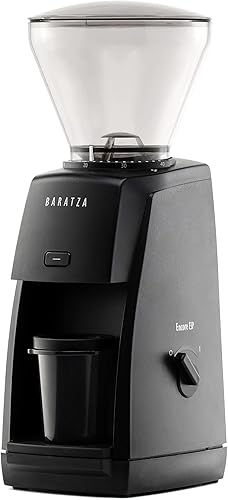
The Baratza Encore ESP separates fine espresso steps from a coarser filter range. The Breville Smart Grinder Pro adds timed dosing and 60 settings, while the AMZCHEF offers a touchscreen, timer and 48 settings.

Espresso grinder vs coffee grinder: what is the difference?
The key difference is the adjustment range, not the label on the grinder. Espresso needs fine grounds and small, useful changes so you can tune a shot.
Coffee grinder is a broad term for a machine that grinds beans for one or more brew methods. Espresso grinder usually describes a grinder with settings intended to reach espresso-fine grounds and make adjustments there.
The two categories overlap. A grinder can offer espresso settings and still grind coarser for drip coffee, pour over or French press.
What should an espresso grinder do?
An espresso grinder should offer fine settings with enough adjustment to help you dial in a shot. Its dose controls also matter because you need a repeatable way to grind for each basket.
Grind size changes how quickly water passes through coffee. If a shot runs too fast, a finer setting may help; if it runs too slowly, a coarser setting may help.
The right setting depends on your beans, basket and machine.
Our guide to choosing the right grind size for espresso explains how to make those changes. A grinder with many settings can help, but the setting numbers alone don't show how each adjustment will affect your shot.
Can one grinder work for espresso and other coffee?
Yes, one grinder can cover espresso and other brew methods when its settings span both fine and coarse grounds. Check how it handles the espresso range, then consider how often you'll switch methods.
The Baratza Encore ESP has micro-steps from #1–20 for espresso and macro-steps from #21–40 for filter brewing. Breville describes 60 settings from espresso to French press, and AMZCHEF lists 48 settings from espresso to coarse methods such as French press and cold brew.
If espresso is your main brew, a useful fine range matters more than a long list of settings. If you move between methods, clear adjustment ranges and an easy way to return to a familiar setting can make that routine simpler.
Which grinder fits your routine?
Choose the Baratza for its separate espresso and filter ranges, the Breville for timed dosing, or the AMZCHEF for touchscreen control. Each takes a different approach to making grind changes and starting a dose.
Our score weighs specs, features and buyer feedback against what you're shopping for. The best match depends on whether fine adjustment, timed dosing or flexible brewing matters most.
Baratza Encore ESP: best for espresso adjustment
The Encore ESP uses micro-steps from #1–20 for espresso, with macro-steps from #21–40 for filter brewing. That divided range makes the settings easier to think about when you use both methods.
It has a front-mounted pulse button and an on/off switch. Its quick-release burr mounting system allows removal without taking the whole grinder apart, which can make cleaning more straightforward.
Choose it if espresso adjustment is your first priority and filter coffee is also part of your routine. If you want to set grinding time on a display, consider the Breville or AMZCHEF instead.
Breville Smart Grinder Pro: best for timed dosing
The Breville Smart Grinder Pro offers 60 settings and adjusts grind time in 0.2-second increments. Its LCD shows the grind setting, grind time and the number of shots or cups selected.
It can grind into a portafilter or an airtight container. The included portafilter cradles fit small 50–54 mm and large 58 mm portafilters.
Choose it if you want to adjust time as well as grind size, or if you switch between espresso and other brew methods. If a simple manual start and stop suits you better, the AMZCHEF has a manual mode.
AMZCHEF Burr Coffee Grinder: best for touchscreen controls
The AMZCHEF has 48 settings, a touchscreen and timed grinding adjustable up to 40 seconds in 0.5-second steps. It also has a manual mode for starting or stopping the grind.
Its settings cover espresso through French press, pour over, drip coffee and cold brew. The manufacturer describes its anti-static design as a way to reduce cling and spills.
Choose it if you want touchscreen controls and one grinder for several methods. If fine espresso adjustments are your main concern, compare its 48 settings with the Encore ESP’s dedicated micro-step range before deciding.
Does burr type matter for espresso?
Burr construction is one detail to compare, but the grinder's fine adjustment and dosing controls are just as relevant. A burr label by itself doesn't tell you whether a grinder has the range you need.
The Encore ESP uses 40 mm hardened alloy steel burrs. Breville describes its Smart Grinder Pro as a programmable conical burr grinder, and the AMZCHEF has 40 mm stainless steel conical burrs.
All 3 are burr grinders, yet their adjustment systems differ. Compare the ranges and controls against how you make coffee rather than choosing from burr material alone.
How should you choose grind adjustment and dosing?
Pick adjustment controls that let you make small changes, then choose a dosing method you can repeat. The right combination depends on how you prefer to prepare each shot.
The Encore ESP uses numbered micro-steps and macro-steps. The Breville uses 60 settings with a digital timer, while the AMZCHEF combines 48 settings with timed and manual modes.
A timer helps you set a grinding duration, but a given time isn't automatically the right dose for every coffee or setting. Weighing grounds with a separate scale can help you compare doses as you dial in.
If you want a step-by-step routine, follow our guide on how to dial in espresso. Make one change at a time, then use how the shot flows and tastes to guide the next adjustment.
Should you buy a grinder built into an espresso machine?
An espresso machine with a built-in grinder can save counter space, while a separate grinder gives you a stand-alone choice for grinding. Consider how much room you have and whether you want to change grinders independently.
A built-in grinder keeps the grinder close to the machine and can simplify a compact setup. A separate grinder takes its own counter space, but it can serve with more than one brewer.
Our guide to espresso machines with a grinder covers machines that combine the two. If you already have an espresso machine, a separate grinder may be the simpler upgrade.
What matters besides the grinder label?
Check portafilter fit, dose control and cleanup along with the grind range. Those details affect whether a grinder fits the way you make espresso every day.
The Breville includes cradles for 50–54 mm and 58 mm portafilters. AMZCHEF describes compatibility with 51–54 mm and 58 mm portafilters, while the Encore ESP's description includes an espresso dosing cup for dosing into a portafilter.
For cleanup, the Encore ESP has a quick-release burr system. AMZCHEF includes a cleaning brush, and Breville includes one with its grinder as well.
Before you choose, check your portafilter size and think about where grounds will collect. A suitable grind range matters most, but a clear dosing path can make the routine easier.
Which should you choose for espresso?
Choose the Encore ESP if its dedicated micro-steps for espresso fit your priority; choose the Breville if you want a timer and LCD; choose the AMZCHEF if you prefer touchscreen and manual controls. Any of the three also offers options for other brew methods.
If you're learning espresso, start with the grinder that gives you a clear way to adjust grind size and repeat your dose. Then use grind-size guidance and a consistent dial-in routine as you learn how your coffee behaves.
The simplest decision rule is to match the adjustment system to your routine: espresso-focused micro-steps, timed dosing, or touchscreen flexibility.
Frequently asked questions
Can a coffee grinder grind beans for espresso?
Yes, if it can make a fine grind and adjust in small enough steps to suit your espresso setup. Burr grinders with espresso ranges can also handle other brew methods, but a grinder meant mainly for coarse brewing may not offer the fine control you need.
Is an espresso grinder different from a coffee grinder?
An espresso grinder is still a coffee grinder; the useful difference is whether its adjustment range and dose controls suit espresso. Look for fine settings that let you make small changes, then consider whether you also want settings for drip, pour over or French press.
Do you need a separate grinder for espresso and drip coffee?
Not always. A grinder with distinct fine and coarse ranges can work for both, such as the Baratza Encore ESP with micro-steps for espresso and macro-steps for filter brewing.
You may prefer separate grinders if changing settings often is inconvenient for your routine.
Are burr grinders better for espresso?
Burr grinders are a practical choice for espresso because grind adjustment is central to dialing in a shot. Compare the available fine settings and how each grinder handles dosing; the word “burr” alone doesn't tell you how precise its espresso range is.